

Affordable zinc instead of expensive lithium: China develops long-lasting zinc batteries
Researchers from the City University of Hong Kong have created a coating that increased the stability of a zinc battery anode by 38 times. The prototype retains 90% of its capacity after 350 cycles.
Zinc batteries lose their lifespan due to anode degradation: during operation, cracks and other damage form on its surface. Scientists studied this process using X-ray photoelectron spectroscopy and found that the protective film changes its structure and cracks.
The team led by Professor Zhi Chunyi discovered that a high concentration of zinc atoms near the anode slows down the formation of damage. Therefore, the researchers increased the zinc content in the protective coating. This allowed them to enhance the anode's stability by approximately 38 times without significantly degrading the battery's electrochemical characteristics.
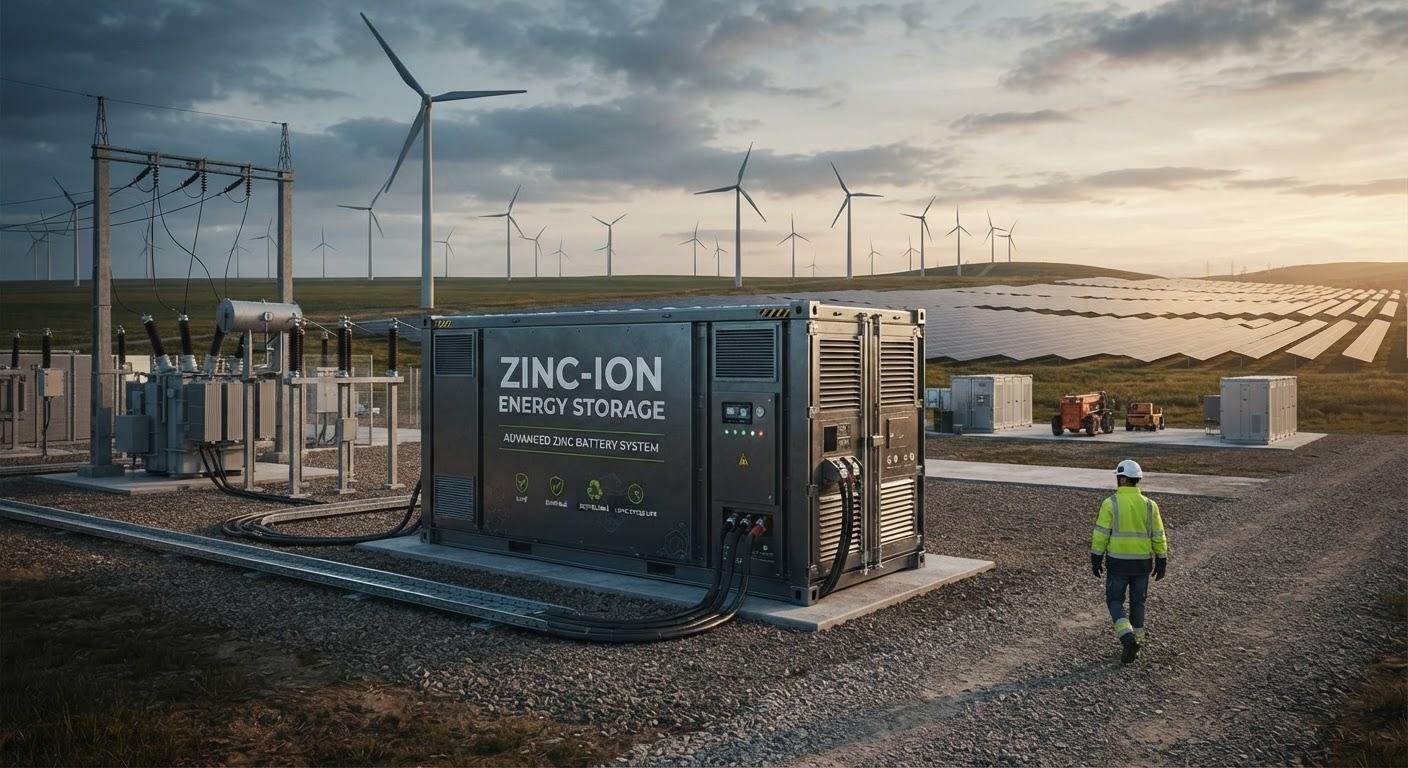
The prototype's specific energy density is about 274 Wh/kg. The development is seen as a potentially cheaper and safer alternative to lithium systems, including for stationary industrial energy storage. However, the technology is still in the research stage: its durability must still be tested over a greater number of cycles and under real-world operating conditions.