


Neural network helped more accurately select brain stimulation for bionic vision
Scientists trained a neural network to select stimulation for the visual cortex for a bionic eye. In an experiment with one participant, it more accurately predicted his visual sensations and required less current.
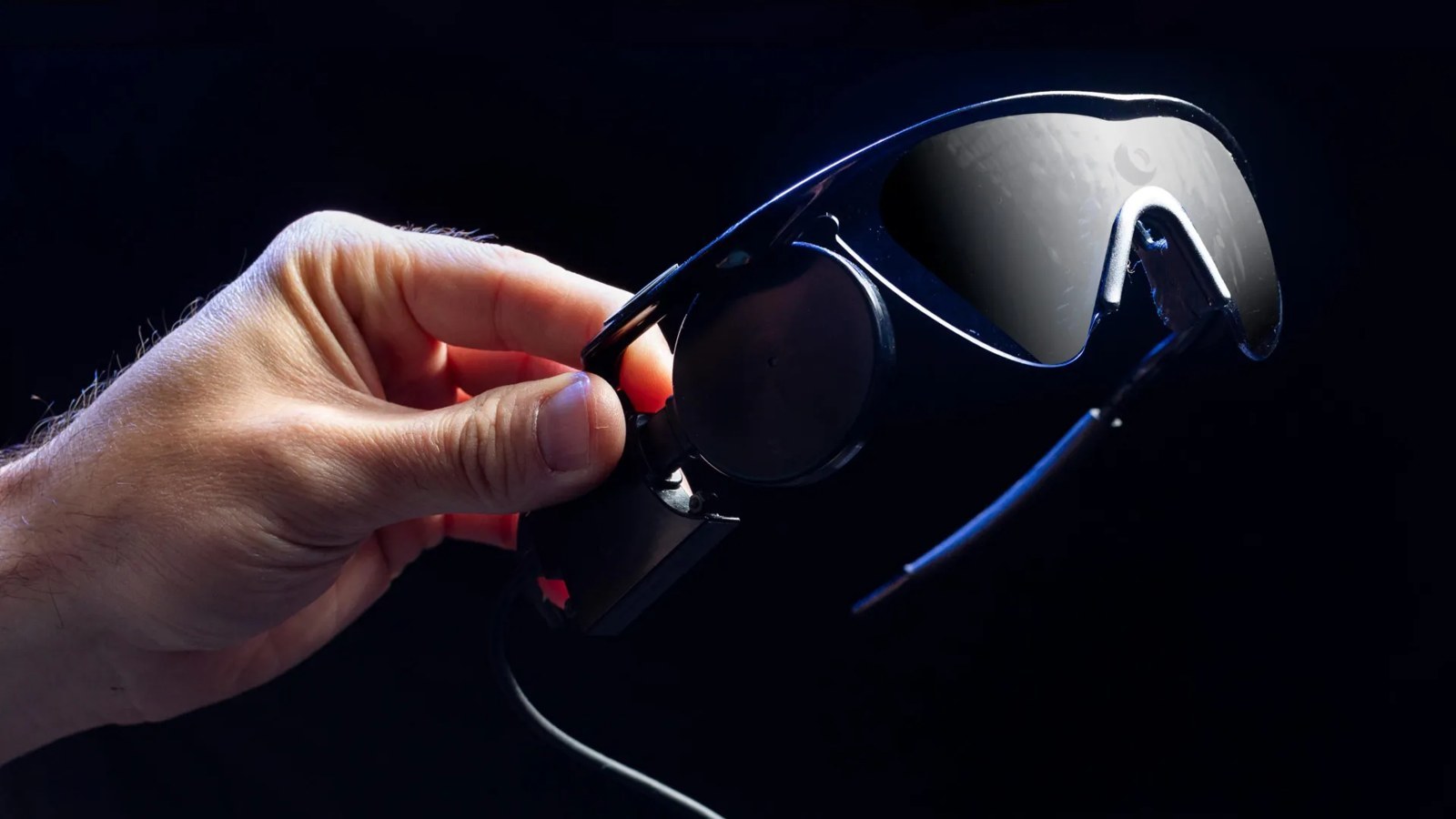
Researchers from three organizations presented a proof of concept for visual prostheses—devices that stimulate the visual cortex directly, bypassing the eyes and optic nerves. The work was published online in the journal Neuron.
The experiment was conducted in Spain in 2024 with a 27-year-old man who lost his vision following a traumatic brain injury. A temporary array of 96 electrodes was placed in his visual cortex. The implant was to be removed after six months. When current was applied, the participant saw phosphenes—spots and shapes of light that may resemble flashes, stars, or fireworks.
The neural network was trained to link electrical stimulation settings with brain responses. The calculation also included brain activity immediately before each trial to account for its current state. The model then selected signal combinations that, according to its prediction, should produce the desired pattern of activity.

During testing, these schemes more accurately reproduced the specified brain activity and required less current than the compared methods. Additionally, the recorded brain responses better predicted what the participant perceived than the stimulation parameters themselves. He reported whether he saw a phosphene and, in separate tests, described its shape, size, brightness, and color.
The authors note that the result does not yet mean the restoration of full vision. Researchers still need to understand how visual cortex activity translates into subjective visual sensation. In their assessment, future prostheses may require not a fixed set of signals but adaptation to the response of a specific brain.