


AI Independently Planned and Executed Part of a Mouse Brain Surgery for the First Time
A biotechnology startup reported a successful experiment in which an AI agent selected the gene therapy vector, dosage, and target area of the brain in a mouse with epilepsy, then controlled a robotic system to perform the injection. A licensed veterinarian supervised the system before each irreversible action, while a human specialist performed the craniotomy.
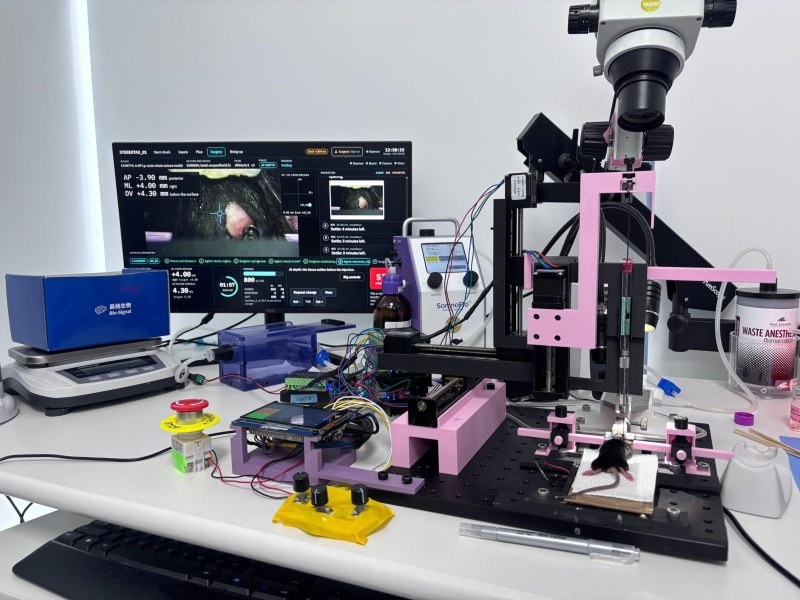
The startup used an AI agent based on the Anthropic Sonnet model. The system received data on the animal's condition, a list of 19 gene therapy vector options, and three scientific articles, after which it developed a treatment plan and determined the coordinates for drug administration. According to the company, the mouse tolerated the procedure and was actively moving afterward.
During the procedure, a veterinarian approved each irreversible action. The setup included an emergency stop button, and some safety restrictions could not be bypassed even by operators, which required manual adjustments to the agent's code. A specialist independently performed the craniotomy—the surgical opening of the skull to access the brain.
Initially, the experiment was planned using Opus 5.5, but the model refused to operate after identifying the biological nature of the task. An earlier version, Opus 5, was able to prepare a surgical plan but also declined to execute it in real time. The source separately highlights questions of responsibility and ethics in animal experiments; when AI was used in sinus surgery, the number of failures reportedly increased by more than 12 times.