


Agent AI: How a Language Model Evolves from a Text Generator into a Task Solver
Agent systems differ from conventional language models by their ability to use tools, verify results, and continue working until the set goal is achieved.
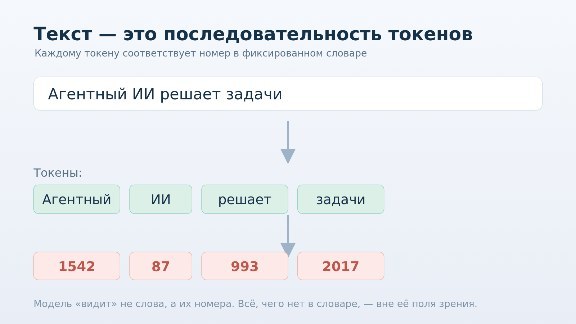
A conventional language model predicts the next token—a fragment of text from its vocabulary. Therefore, its response may appear convincing but not correspond to reality. Hallucinations are linked to the probabilistic nature of generation, not just errors in a specific service.
Various approaches are used to select the continuation: from greedy selection of the most probable token to sampling, which preserves variability. The quality of generation also depends on the context size—the volume of text the model considers simultaneously—and training methods. After pre-training on large text corpora, models are fine-tuned using examples of desired responses and user feedback to better follow instructions.
Modern AI systems include not only a language model but also filters, post-processing, and tools. Multimodal models work with images and documents, while open families like LLaMA and Mistral allow researchers to explore architecture and fine-tune models. Among other technologies are the sparse Mixture of Experts architecture, which engages only a portion of expert blocks, and speculative decoding, which accelerates generation by parallel preparation and verification of tokens.
An agent differs from a chatbot in that it is not limited to a single response. It can independently search for sources, execute code, cross-check results, and continue task execution. This approach is also used in text verification systems: an AI assistant can not only detect borrowings or signs of generation but also explain the results to the user.