

Xpeng Announces Its AI Model GroundingPI Outperformed GPT-6 Astra in Tests
Xpeng has introduced the perception model GroundingPI. According to the company, in a comparison across 34 tests, it scored 73.68 points compared to 71.54 for GPT-6 Astra.
The company developed GroundingPI in collaboration with research teams from Peking University and the University of Hong Kong. The model's code and weights are already available to the public.
GroundingPI was designed for physical tasks—autonomous driving and robotics. Unlike general-purpose models primarily focused on digital scenarios, it is intended to precisely determine the position of objects in space. The training utilized perception data without labeled robot actions. The model is optimized for a fast physical AI loop responsible for perception and action execution, rather than replacing a general-purpose model that understands tasks and devises plans.
The project is currently at the scientific prototype stage. In simulations, GroundingPI demonstrated two potential advantages. A system based on it exceeded the success rate of comparable models, which required 75% of demonstration data, by using only 50% of that volume. This could reduce the costs of manually collecting examples for robots.

In scenarios involving sorting bulk materials and counting objects in containers, the system maintained stable performance despite changes in materials, object types, and backgrounds. According to Xpeng, this creates conditions for reusing the solution across different workstations.
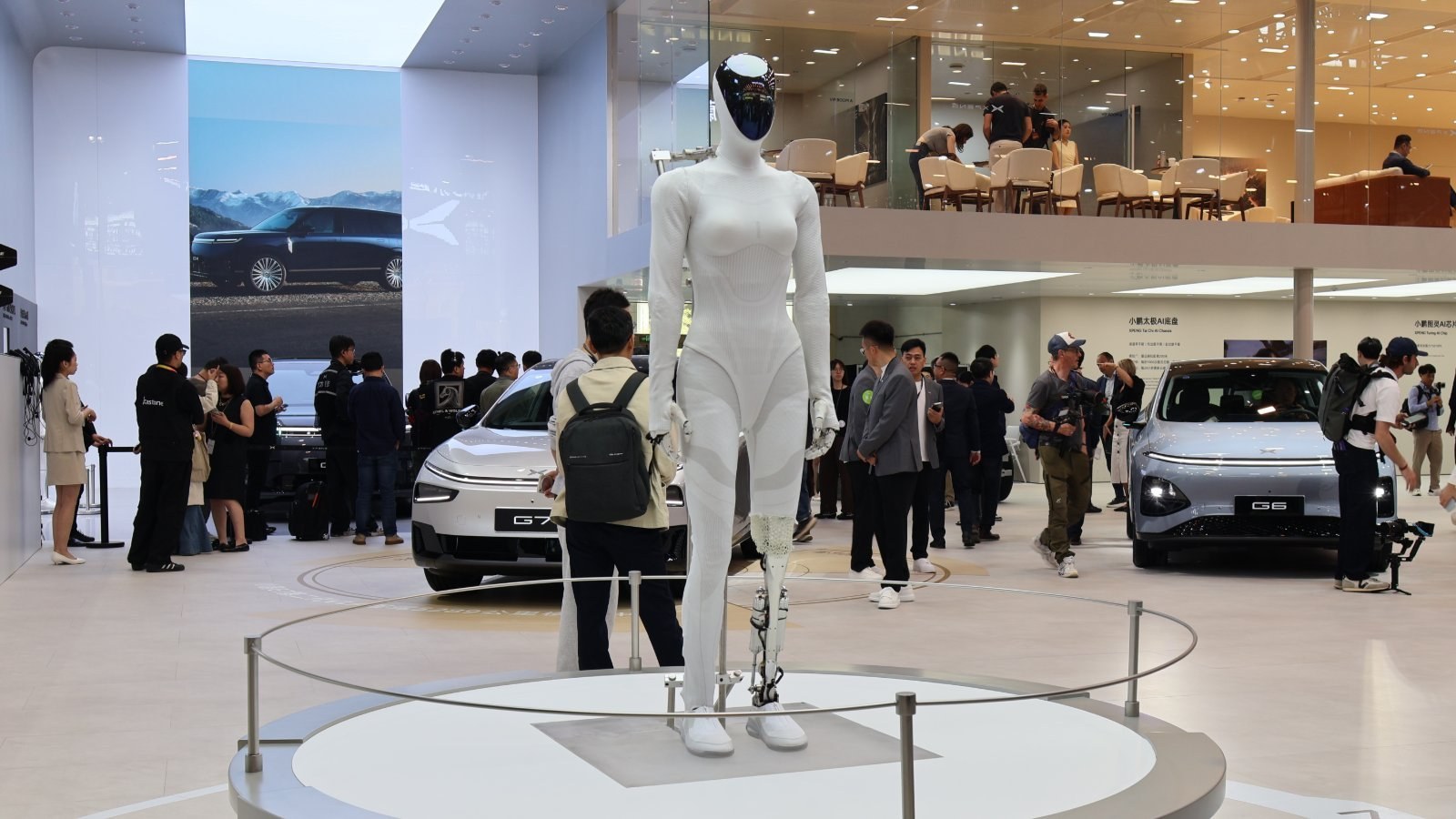
The company links GroundingPI to the development of physical AI for driver assistance systems, humanoid robots, and robotaxis. Earlier this year, Xpeng merged its autonomous driving and smart cabin centers into a unified general intelligence center led by AI expert Liu Xianming.